Conservation news...
Ukraine: Safeguarding Life on Chalk
30.07.14
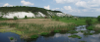 In the silence of Ukraine’s steppe country, among vast high plains, sweeping valleys and deep gorges, outcrops of white chalk bedrock appear, eroded into strange shapes by wind and rain, forming a pristine and unforgettable landscape.
Saudi Arabia: Kings Park and Botanic Garden bringing the desert to life
20.06.14
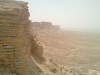 In a world facing problems of increasing desertification, Kings Park - located in Western Australia - has developed a range of research and extension initiatives in the arid regions of the Middle East, aimed at environmental, conservation and horticultural programmes.
USA: John Muir: Wilderness Prophet (1838-1914)
30.04.14
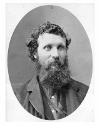 This year sees the
centenary of the death of John Muir, naturalist, conservationist and ‘Father of
National Parks’. He was born in Scotland, in the small, coastal town of Dunbar
on the 21st April, 1838 and went to school there until the age of 11,
when he and his family left these shores for a new life in the United States.
This year sees the
centenary of the death of John Muir, naturalist, conservationist and ‘Father of
National Parks’. He was born in Scotland, in the small, coastal town of Dunbar
on the 21st April, 1838 and went to school there until the age of 11,
when he and his family left these shores for a new life in the United States.
Chile: Preserving Andes Country
24.03.14
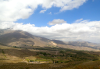 Environmental conditions in the High Andes of Central Chile are extreme, affecting all aspects of life here and limiting species numbers. However the unique characteristics of this ‘bio-geographical island’ have resulted in a high level of endemism – plants are found here that occur nowhere else on Earth.
New BGCI Partnership and Photography Competition
12.03.14
 BGCI, Botanic Gardens Conservation International, has an exciting new partnership with Chic Outlet Shopping®, the Collection of luxury outlet shopping villages in Europe and China - in the UK, Bicester Village.
Portugal: Message in a bottle ... from Cork Country
25.02.14
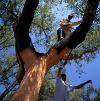 It’s the end of a long day; you kick off your shoes, fetch a couple of glasses and reach for your favourite bottle of claret. You lovingly draw the cork from the bottle, thrilled by that familiar squeaky ‘pop’ as your senses begin to tingle with anticipation!
USA: Preserving and Protecting California Native Plants and Their Habitats
26.11.13
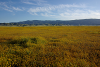 California’s unique habitats have been shaped by millions of years of geology and climate, producing a rich and colourful mosaic of life. Many of the plants and animals found here occur nowhere else and the California Floristic Province is one of the most biologically diverse regions on Earth. Of nearly 3,500 plant species, more than 61% are endemics, but like other botanically spectacular places, California is one of the most threatened. Large-scale, intensive agriculture, a growing population, urbanization, pollution and road construction all contribute to massive habitat destruction and degradation.
USA: Preserving Prairies in the Midwest - A Conservation Challenge
28.10.13
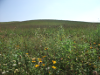 For thousands of years, prairie covered more than a million square miles of the North American Midwest – a vast tapestry of colours and textures made up of tall, swaying grasses and colourful herbaceous perennials, including 9 species of Echinacea, endemic to North American prairies, and Eryngium yuccifolium, used by Native Americans as an antidote to rattlesnake venom.
Spain: Protecting the Flora of Sa Dragonera
07.09.13
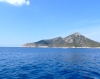 The little,
uninhabited island of Sa Dragonera is 3.2k long and located about 780m off the
south-west coast of Mallorca, in the Balearic Islands. It forms a continuation
of the Tramuntana mountain range that dissects the main island and rises from
the sea with sheer, vertical cliffs, tiny coves and sea caves. Sa Dragonera is
covered with characteristic Mediterranean garrigue vegetation, an open community
of small, mainly evergreen shrubs and a great variety of associated herbaceous
plants like the Autumn Arum, Arum pictum, the beautiful orchid, Anacamptis pyramidalis, and a multitude of annuals and bulb species
which are very colourful in spring. Mediterranean garrigue vegetation is
extremely important as it is the last defence against soil erosion and eventual
desertification.
The little,
uninhabited island of Sa Dragonera is 3.2k long and located about 780m off the
south-west coast of Mallorca, in the Balearic Islands. It forms a continuation
of the Tramuntana mountain range that dissects the main island and rises from
the sea with sheer, vertical cliffs, tiny coves and sea caves. Sa Dragonera is
covered with characteristic Mediterranean garrigue vegetation, an open community
of small, mainly evergreen shrubs and a great variety of associated herbaceous
plants like the Autumn Arum, Arum pictum, the beautiful orchid, Anacamptis pyramidalis, and a multitude of annuals and bulb species
which are very colourful in spring. Mediterranean garrigue vegetation is
extremely important as it is the last defence against soil erosion and eventual
desertification.
HONDURAS IN PICTURES: The ground-breaking work of the Inga Foundation
30.09.13
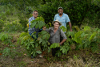 More pictures from the Inga Foundation, working to halt the destruction of the rainforest by slash and burn agricultural practices. Mike Hands and Issy Ellis-Cockcroft of the Inga Foundation are in conversation with Plant Talk on the Plant People page.
Brazil: Amazon Aluminium - Restoring the Rainforest
02.09.13
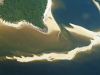 Cruising at around 5,000 feet – I know this because I am sitting directly behind the pilot and am watching his every move over his shoulder – in a (very) small propeller plane, the early morning views are spectacular; the Amazon river near Santarem, approaching 60 kilometres wide at this point, divides into a maze of channels and islands. Islands are painted every shade of green, shedding swirling, early mist like smoke. Some are forested with white sandy beaches, such that you could be forgiven for believing you might be in the Caribbean. I become alarmed and think we may be lost when the pilot unfolds a road map; but instead of navigating by it, he places it over the windscreen to eclipse the blinding sun – good move – but I now wonder how he can see where we’re going!
BRAZIL IN PICTURES: Amazon Aluminium - Restoring the Rainforest
02.09.13
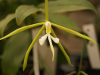 More pictures from Peter Whitbread-Abrutat’s Amazon adventures
Malta: Restoring Ramla - The Gaia Foundation is protecting Malta’s Coastal Heritage
22.08.13
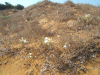 On that
magical frontier for life, where the land meets the sea, you may find one of the
most beautiful flowers of the Mediterranean basin, the Sea Daffodil, Pancratium maritimum, but it is becoming increasingly rare. However,
across the dunes of ir-Ramla, on the Maltese island of Gozo, drifts of them
thrive in their sandy habitat in the searing heat and incandescent light of
midsummer, cooled only by salty sprays of seawater carried on the wind.
On that
magical frontier for life, where the land meets the sea, you may find one of the
most beautiful flowers of the Mediterranean basin, the Sea Daffodil, Pancratium maritimum, but it is becoming increasingly rare. However,
across the dunes of ir-Ramla, on the Maltese island of Gozo, drifts of them
thrive in their sandy habitat in the searing heat and incandescent light of
midsummer, cooled only by salty sprays of seawater carried on the wind.
UK: Are the rainforests for sale?
10.04.12
 On April 20 four leading authorities on rainforests will gather at the Eden Project in Cornwall, UK for a public debate on the future of rainforests. Joining BBC news presenter George Alagiah, who is hosting the event, will be Prof. Ghillean Prance (Eden Project Trustee), Andrew Mitchell (Executive Director Global Canopy Programme), Simon Counsell (Executive Director Rainforest Foundation UK), and Dr. Ben Beck (Director of Conservation, Great Ape Trust).
Fiji: Glorious new Medinilla found on Kadavu
24.01.12
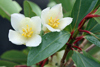 An exciting new flowering plant belonging to the Medinilla plant group has been discovered in the highlands of Matasawalevu village, on the island of Kadavu in Fiji. The plant was found during a biodiversity assessment of the Nakasaleka district carried out as part of IUCN’s Water and Nature Initiative (WANI).
UK: Quality not quantity for woodlands
01.12.11
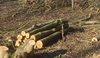 One in six woodland flowers is threatened with extinction and good management is key to reversing the worrying declines in woodland plants and animals say one of the UK's leading plant charities, Plantlife, in their latest report.
UK: Global Business of Biodiversity conference
15.11.11
Richard Benyon is set to join 50+ other speakers at GBOB-GBOF 2011 in London at the IET Savoy Place.
Global: Mixed news from the IUCN Red List update
10.11.11
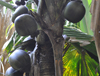 The most comprehensive audit on the state of the planet's wildlife has just received an update. The IUCN Red List of Threatened Species™ has now reviewed more than 61,900 species, and another big step forward has been made toward developing the Red List into a true "Barometer of Life,‟ as called for by leading experts in Science magazine in 2010.
UK: "Up in Smoke" coming to Cornwall Film Festival
04.11.11
 If you're in the UK and missed the screening on More 4 in September of Up in Smoke then you have a chance to watch it at the Cornwall Film Festival in Newquay, Cornwall this weekend.
UK: Director of Kew to return to Australia after six years
31.10.11
The Royal Botanic Gardens, Kew - the world's leading botanical institution - announced last month that Director (CEO and Chief Scientist), Professor Stephen Hopper FLS will step down in autumn 2012 after six years in the job.
Borneo: Scientists work hand-in-hand with loggers to investigate forest fragments
27.10.11
Scientists in Borneo have announced the somewhat surprising move to work with loggers in Sabah, Borneo to investigate the effects of forest fragmentation on a huge scale.
Honduras: "Up in Smoke" UK premiere
27.09.11
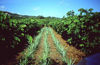 A very important film premieres on UK television tonight that could help transform tropical agriculture. "Up in Smoke" follows the exploits of Mike Hands, a scientist from Cornwall in the UK, who has been developing an innovative agroforestry technique called alley-cropping in equatorial rainforests for 25 years.
UK: Getting the sands moving again
26.08.11
 Britain's unique coastal dune flora will receive some help this year as Plantlife try to get them moving again as they begin a novel three year project on the dunes of South Wales.
Uruguay: ¡Hasta siempre Ricardo!
23.08.11
 Plant Talk received a terribly sad, but beautiful, email from The World Rainforest Movement last week on the passing of its long-time dedicated coordinator Ricardo Carrere. Here it is in full...
Seychelles: First country in world to protect half of its territory
27.07.11
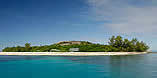 IUCN announced in a press release recently that just over half (50.59%) of the land in Seychelles will become protected by law with the addition of an extra 45,500 hectares.
Global: The Red List of Rhododendrons
21.07.11
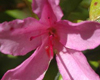 Botanic Gardens Conservation International (BGCI) has published a Red List of Rhododendrons report assessing the conservation status of the Rhododendron genus. Research by BGCI and Royal Botanic Garden, Edinburgh shows that a quarter of the 1,157 Rhododendron species are under threat in the wild.
UK: Mapping the UK palm oil supply chain
08.07.11
 A new report, released by Proforest for Defra in May 2011, shows the scale and complexity of palm oil consumption in the UK.
UK: Where to go to see orchids this year
07.04.11
 Few can resist the alluring sight of an orchid so to celebrate this the Wildlife Trusts have put together an online guide to 40 of the best sites in the UK to see these remarkable flowers.
Global: Botanical pranks from around the world
06.04.11
 Only on this day... Some weird and wonderful April Fools stories emerged on 1 April. First to make me chuckle was of a novelty black and white daffodil grown by scientists in Cornwall, UK.
Global: Calling all nature photographers, IUCN
29.03.11
 The International Union for the Conservation of Nature (IUCN) have put out a competition call to all nature photojournalists. Judges will be looking for entries which use inspirational images of nature...
UK: The first in-depth study of a rare juniper
25.03.11
 Scientists in Cornwall have accurately mapped the population of a rare juniper subspecies confined to the Lizard peninsular, Juniperus communis ssp. hemisphaerica, for the first time, and produced a management plan for its ongoing conservation.
Philippines: Tragedy in Palawan unites environmental campaigners
07.03.11
 A few weeks ago the small, but committed, group of environmental campaigners on Palawan Island in the Philippines were shocked by the murder of Gerry Ortega.
Global: Beautiful film launches International Year of Forests
03.03.11
 2011 has been designated International Year of Forests by the UN. This beautiful film, Of Forests and Men, made by Yans Arthus-Bertrand of Earth from the Air fame, was commissioned by the UN and shown during the plenary session of the recent UN Forum on Forests in New York.
South Africa: Proposed reforms in cycad trade may not go far enough
28.02.11
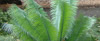 TRAFFIC, the wildlife trade joint monitoring programme of IUCN and WWF today announced concerns over recent proposals from South Africa to tighten up trade laws surrounding cycad plants.
UK: Charities say the fight is not yet over for England's woods
22.02.11
 Last week's reversal of the decision to sell off England's public forests was a victory of people power and a demonstration of the strength of collectivism. But some of the country's most important charities say the fight is far from over.
UK: Unceremonious retreat on the great forest sale
17.02.11
In the face of fierce public and political opposition Caroline Spelman, the UK's Environment Secretary, today announced a massive U Turn in the consultation into the mass sale of the UK's huge forestry estate.
Global: State of the world's forests 2011
15.02.11
 The ninth biennial issue of State of the World's Forests, released by the food and Agriculture Organization of the United nations, coincides happily with the 2011 UN International Year of Forests.
Brazil: First photos of uncontacted tribe deep in the Amazon
01.02.11
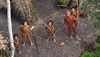 Some extraordinary photos surfaced recently of an uncontacted tribe deep in the Brazilian Amazon near the border with Peru. The remarkable, thriving, community were seen with painted in Annatto, with plentiful baskets of food, and a healthy community garden.
29.12.10
 As the International Year of Biodiversity draws to a close we can reflect on some of the amazing botanical discoveries of the past 12 months.
Mozambique: Kew find new mistletoe from slopes of Mount Mabu
22.12.10
 With just a few days to go before Christmas scientists at Kew have announced the discovery of a new species of tropical mistletoe from the remote slopes of Mount Mabu in Mozambique.
Mexico: Hopeful end to Cancun climate talks
21.12.10
Two long weeks of climate negotiations ended recently in Cancun, Mexico. Following on from the cautious success of the biodiversity summit in Nagoya, Japan the finale of Cancun has also given hope to environmental campaigners around the world.
Norway: Money pledged to save crop wild relatives
10.12.10
 The Crop Diversity Trust (CDT), based in Rome, today announced a massive cash injection to understand and safeguard the world's major food crops and strengthen food security in times of uncertainty.
UK: Mistletoe under threat says National Trust
08.12.10
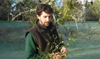 One of the UK's biggest landscape guardians - The National Trust - has warned that one of the most recognisable botanical symbols of Christmas faces an uncertain future because of the decline in traditional orchards.
Mexico: Call to reverse the world's degraded forests
06.12.10
Huge international meetings seem to come along at a frightening rate these days. But frustratingly for environment campaigners they rarely seem to deliver anything of note (the acceptance of a strengthened GSPC in the recent Nagoya talks a notable exception).
UK IN PICTURES: Botanical rarities from Breckland
03.12.10
 Plantlife - the plant conservation charity - are working to protect nine priority species in the extraordinary Breckland landscape. Here's a few photos of some of their target species.
UK: Glorious diversity found in ancient farming landscape
02.12.10
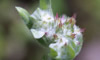 In the far east of England on the border between the counties of Norfolk and Suffolk lies a piece of land called Breckland. It's been known for a long time that Breckland has some rather special natural history but a recent study has shown just how important it really is.
UK: The Atlantic Forest comes to chilly Britain
01.12.10
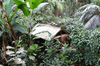 The World Land Trust's Atlantic Forest exhibit - that won a coveted gold medal at the Chelsea Flower Show - has been moved to one of the biggest natural history visitor attractions in the country, Chester Zoo.
UK: A rare fungus and the forgotten Kingdom
25.11.10
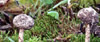 The discovery of a rare fungus - a type of puffball - at the Wildlife Trusts' Attenborough Nature Reserve reminds us of the greater need to look after nature's forgotten Kingdom.
Indonesia: Forests to fall in the name of climate?
24.11.10
 The tragedy of Indonesian forest clearance looks set to continue if a report released yesterday by Greenpeace is correct. Protection Money highlights how climate funds could, scandalously, bankroll deforestation across the archipelago of 17,000 tropical islands.
UK: Richard Mabey in conversation with Stephen Hopper
23.11.10
The author of some of the UK's most important natural history books will meet the director of the world's most eminent botanical institutions on 1 December in a rare treat for all lovers of botany.
Cambodia: New pitcher plant from remote Cardamom Mountains
17.11.10
 A beautiful new pitcher plant from Cambodia has been added to the database of life thanks to a discovery on expedition by British photographer Jeremy Holden of Fauna and Flora International (FFI).
India: Survival's "real Avatar" film scoops award
15.11.10
 Survival International’s film ‘Mine: Story of a Sacred Mountain’ has won the award for ‘Best Short’ in the category of International Human Rights at the Artivist Film Festival to be held in Hollywood.
Seychelles: Latest conservation news from the islands
12.11.10
 The latest issue of Kapisen - the newsletter of the Seychelles Plant Conservation Action Group - has been released. Edited by Katy Beaver, Eva Schumacher and Christoph Kueffer Kapisen provides a biannual insight into plant conservation issues on these remote, beautiful and under-resourced islands.
UK: The flower of the fields that marks Remembrance Day
11.11.10
 The common poppy (Papaver rhoeas) has come to symbolise much more than being a common weed of agricultural fields for now it will always be remembered as the flower that marks some of the most important landscapes and events in European social history.
Indonesia: Greenpeace urge Obama to support forests
10.11.10
As Barack Obama makes a return to Indonesia, where he spent four years of his childhood, Greenpeace today challenged the United States to dramatically increase the financial support it gives Indonesia to reduce deforestation and cut its substantial greenhouse gas emissions.
Indonesia: Round Table talks begin while palm oil production rises
09.11.10
 The Roundtable on Sustainable Palm Oil (RSPO) has begun its latest round of talks in Jakarta, Indonesia. Established in 2004 the RSPO was a rapid response to the urgent need for more sustainably produced palm oil in a rapidly growing global market.
Philippines: Expanding Oil Palm aggression in Palawan Reserve
08.11.10
 The Ancestral Land Domain Watch Network (ALDAW) have released a new video on their Vimeo channel highlighting the encroachment of Oil Palm plantations into the Palawan Man and Biosphere Reserve.
Global: BGCI celebrate strengthened GSPC
04.11.10
Botanic Gardens Conservation International, and many other organisations, have been cautiously celebrating since the COP10 negotiations closed in Nagoya five days ago.
Japan: COP10 ends on a relative high
01.11.10
After seeming to stall half way through the negotiations the finale of Nagoya ended on a high note as firm commitments have been made by the 195 participating countries and, importantly, the Global Strategy for Plant Conservation (GSPC) has been strengthened.
Asia: The state of plant conservation
28.10.10
 The International Union for Conservation of Nature (IUCN) have launched an important new report from the faltering Nagoya biodiversity conference. The First Asian Plant Conservation Report takes an in-depth look at the progress towards the Global Strategy on Plant Conservation (GSPC) on the vast continent.
Costa Rica: Country receives prestigious award for biodiversity laws
26.10.10
At an awards ceremony in Nagoya, Japan at the COP10 Biodiversity summit Costa Rica and Australia have been recognised for their efforts in safeguarding biodiversity for future generations.
25.10.10
 The largest shake-up of UK land ownership in recent times looms as plans to sell off more 150,000 hectares of woodland and forestry are drawn up by the government.
Japan: Conservation organisations take opportunity to speak out
22.10.10
 As delegates from around the world convene in Nagoya, Japan in an effort to find a route out of the biodiversity crisis, conservation organisations are using this opportunity to tell their stories.
Global: Implementing GSPC Target 8, a report by BGCI
20.10.10
 On the second day of COP10 in Nagoya, Japan Botanic Gardens Conservation International (BGCI) have published a report reviewing progress in 2010 towards target 8 of the CBD’s Global Strategy for Plant Conservation (GSPC).
Japan: Honest, but optimistic, opening statement by Ahmed Djoghlaf
19.10.10
As 16,000 representatives from more than 190 countries gather in Nagoya, Japan for one of the most important meetings in history, the man in charge of keeping the good ship biodiversity afloat has issued an opening statement.
Japan: Biodiversity summit opens
18.10.10
Seventeen years after the Convention on Biological Diversity (CBD) entered the vocabulary of conservationists the world over more than 190 nations are gathered in Nagoya, Japan for the 10th Conference of the Parties (COP10).
Brazil: Community botany in the heart of the Amazon
15.10.10
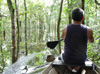 By 1990 the inhabitants of ten tiny communities scattered along the Jauaperi river realised their traditional ribeirinho (riverbank) livelihoods were under threat. They set up the Amazon Association, which has made a real difference to their lives, and the next step is a community botany partnership. This will give them new skills to ensure the success of a new co-operative and to understand and manage their land (which includes habitats from dry land ‘terra firme’ rainforest, to seasonally flooded ‘igapó’ and ‘campina’).
UK: Funding in the bank for woodland home of rare plant
12.10.10
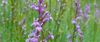 A woodland nature reserve has been awarded nearly £50,000 to improve the prospects of the largest colony of one of the UK's rarest plants - Lobelia urens (heath lobelia).
Kenya: Threatened grasslands protected on Kinangop Plateau
07.10.10
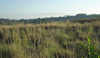 The World Land Trust (WLT) announced today that their partner, Nature Kenya, has completed the purchase of 51 acres of threatened grassland - internationally important for its plants and birdlife - on the Kinangop Plataeu.
Papua New Guinea: Incredible new species from remote mountain range
07.10.10
 Scientists from Conservation International (CI) have discovered nine remarkable new plants, in a total of 224 new species, in a Rapid Assessment Program (RAP) of rainforest exploration in Papua New Guinea in 2009 in partnership with Papua New Guinea's Institute for Biological Research (IBR) and A Rocha International.
Brazil: Green Party candidate polls well in Presidential first round vote
05.10.10
An ex rubber tapper and famous rainforest campaigner from the Amazon state of Acre, Brazil polled a remarkable 19 per cent of the vote for the Green Party in the first round of Brazil's presidential election.
The Sampled Red List IN PICTURES
01.10.10
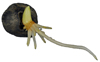 The ground-breaking report - the Sampled Red List Index for Plants - created in partnership between Kew, the Natural History Museum and IUCN was released this week. The report's finding suggests 20 per cent of all known plant species are under threat.
Global: Important study of world’s plants shows strength of UK science
30.09.10
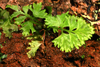 A new study released yesterday at Kew Gardens shows that one fifth of the world’s plants are under threat of extinction. This huge body of work was released to coincide with The International Year of Biodiversity and the forthcoming United Nations Biodiversity Summit in Nagoya, Japan.
UK: Nepalese Ambassador visits RBGE
27.09.10
 Links between Nepal and Scotland were strengthened when Nepalese Ambassador to the UK, Dr Suresh Chalise made an official visit to the Royal Botanic Garden Edinburgh (RBGE) last friday.
South America: Re-writing the history of Andean Dry Forests
24.09.10
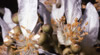 Scientists from some of the world’s most prestigious botanical institutions have re-written the history of the extraordinary Andean Dry Forests and in the process helped set an agenda to safeguard their future.
UK: New book for woodland managers
23.09.10
 A handbook designed to help the owners and managers of native broadleaved woodland get the most from their trees has been published by the Forestry Commission.
Philippines: Major setback in Palawan campaign
21.09.10
 In recent months Plant Talk has been closely following the unfolding drama in Palawan Province, Philippines, where corporations and the government are colluding to turn pristine rainforest into a giant mine. Last week the news took a turn for the worse.
Global: World species list under review
20.09.10
 Juliette Jowit reported on Guardian.co.uk yesterday that the world plant species list is undergoing a massive cull. More than 600,000 records will probably be deleted from the database of life because they are duplicates, or not 'new'.
Mexico IN PICTURES: The Ahuehuete Tree
17.09.10
 This remarkable series of photographs show the huge Montezuma cypress (Taxodium mucronatum) that sits in the town square of Santa Maria del Tule in Oaxaca, Mexico.
UK: On Her Majesty's Botanical Service
16.09.10
 The Regius Keeper of Royal Botanic Gardens Edinburgh (RGBE), Professor Stephen Blackmore, has been conferred as Her Majesty's Botanist in Scotland in a ceremony on 13 September.
UK: The fall and continued rise of a rare sedge
15.09.10
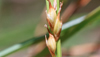 The story of the starved wood-sedge (Carex depauperata) reads like a soap opera. The critically endangered (in the UK) plant was at one time possibly reduced to only one wild individual, but its continuing comeback is testimony to a series of dedicated individuals.
Global: Which plant species would you save?
13.09.10
 The Millennium Seed Bank at Wakehurst Place, Kew has an ambitious target - to protect the most threatened 25 per cent of plant species on Earth.
UK: Blue pimpernel found flourishing
10.09.10
 The rare blue pimpernel (Anagallis foemina) has been found flourishing in a farmer's field after a concerted conservation effort.
10.09.10
 In a week where 2,500 leaders from the global water community are meeting in Stockholm, Sweden and the Head of IUCN's Water Programme called for more investment in solving the water crisis an exciting conference in the UK was announced.
USA: New logo for Conservation International
10.09.09
 Conservation International (CI), one of the world's largest and most influential conservation organisations, launched a new logo this week reflecting their modern global sustainability ambitions.
Global: A fair deal for wild collected plants?
09.09.10
 FairWild Foundation launched its revised Standard for the sustainable management and trade in wild-collected natural ingredients for food, cosmetics and pharmaceuticals yesterday.
UK: PlantNetwork gets to grips with contemporary issues
08.09.10
 PlantNetwork, the national network of botanic gardens and other plant collections in the UK, is currently holding its annual conference at the Eden Project in Cornwall. Appropriate then that the conference Contemporary Issues for Gardens and Plant Collections is being held at one of the UK's most contemporary gardens (Eden opened its doors to the public in 2001).
Hawai‘i: Extinct is forever (but not for this lobelia)
06.09.10
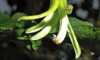 A Hawaiian plant, presumed extinct for 90 years, and whose Hawaiin name commemorates Pele (the volcano goddess in Hawaiian mythology), has rather appropriately been discovered on the slopes of the Kohala volcano.
USA: Losing Paradise travels on to Smithsonian
03.09.10
 The travelling exhibition Losing Paradise? Endangered Plants Here and Around the World, put together by the American Society of Botanical Artists (ASBA), has moved to the Smithsonian.
Africa: Freshwater species under threat
02.09.10
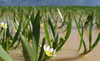 A massive 21 per cent of freshwater species of animals and plants in continental Africa are threatened with extinction, putting the livelihoods of millions of people at risk, a comprehensive new study for IUCN's Red List of Threatened Species has discovered.
Global: World's first society for fungal conservation
02.09.10
 A group of scientists that met at the Royal Botanic Gardens, Edinburgh (RBGE) recently have inaugurated the world’s first society for the conservation of fungi.
UK: Is it getting too warm for the Tufted Saxifrage?
01.09.10 by Pete Kay and Tom Deacon
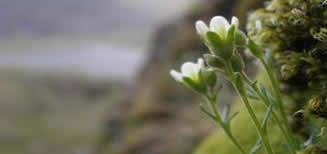 A case study looking at the possible impacts of climate change on a rare Arctic alpine plant clinging on for survival in the rugged mountains of North Wales...
Italy: Endangered sedge is treated to a new home
31.08.10
 An endangered sedge, found in Europe in only two sites in southern Italy, has benefitted from a multi-faceted conservation project carried out by Rome Botanical Garden, the Italian Institute for Environmental Protection and Research (ISPRA) and the Regional Body for Protected Areas (RomaNatura).
UK: First centaury sighting in half a century
27.08.10
 The perennial centaury (Centaurium scilloides), last seen in England in the 1960s, has been re-discovered growing on coastal cliffs in Cornwall. Its only other known UK habitat is the coastal paths of Pembrokeshire National Park, Wales.
UK: Unusual fungus found in bamboo plant
18.08.10
 A rare species of fungi, which smells of rotting flesh and usually found in much more southerly climes, has been found by a resident near Oundle in Northamptonshire, England.
Japan: Two short months till Nagoya and COP 10
18.08.10
 Two months to the day the 10th Conference of the Parties will open in Nagoya, Japan. In this International Year of Biodiversity it will be an important milestone in the calendar.
Ascension Island: Hooker’s lost parsley fern found on mountain
17.08.10 by Stedson Stroud and Olivia Renshaw
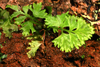 On 27 July 2009, the Ascension Island Government’s Conservation Team were conducting a routine annual plant census with botanist Dr. Phil Lambdon. “We were exploring a narrow ridge on the southern side of Green Mountain. By chance, Phil and I noticed a tiny frond sticking out of a crevice in the rock." Stedson Stroud and Olivia Renshaw tell the story of their chance discovery.
Russia: Help save the Pavlovsk genebank
16.08.10
The world's oldest genebank faces destruction in Russia and there may not be enough time to move the precious cargo to a new location before houses are built on top of the historic land.
12.08.10 by Prof. Ian D. Rotherham
 The end of tradition and the impacts of cultural severance are as big a threat as climate change to biodiversity and ecology explains Prof. Rotherham, so he is organising a major conference to address these issues.
UK IN PICTURES: Wild about summer
10.08.10
 Plant Talk received an overwhelmingly positive reaction to Tori Green's last photo series so as we reach the height of summer in the UK, it's time for some more.
Brazil: Magagascan rainforest and the Everglades 'at risk'
06.08.10
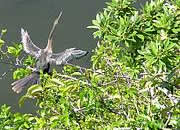 Following the recommendations of IUCN (International Union for Conservation of Nature), important rainforest areas in Madagascar and the Everglades National Park (USA) have been added to the List of World Heritage in Danger at the World Heritage annual meeting, which took place recently in Brasilia.
Ecuador: Historic $3.6 bn deal keeps rainforest above the oil
05.08.10
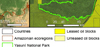 An ambitious international trust fund negotiated between Ecuador and the United Nations Development Fund (UNDP) could pave the way for an exciting new set of projects to protect global rainforests.
Philippines: Initial victory for NGOs and Indigenous people in Palawan
04.08.10
 As many of you will know Plant Talk has been actively supporting a campaign in Palawan Province, Philippines to prevent mining in protected areas rich in cultural and biological diversity. Yesterday we received some good news from the team in Palawan led by the Ancestral Land Domain Watch (ALDAW) network.
Ecuador: Galapagos taken off World Heritage danger list
02.08.10
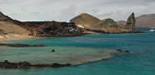 The World Heritage Committee decided to remove the Galapagos Islands (Ecuador) from the List of World Heritage Sites in Danger, despite IUCN´s recommendation to the contrary.
Indonesia: Greenpeace reveal extent of Sinar Mas forest destruction
30.07.10
 Greenpeace released a report yesterday that delves deeper than ever into the rainforest destruction by Sinar Mas - one of the arch enemies of conservationists in SE Asia.
UK: Wildflowers of Brockles Field avoid the plough
29.07.10
 Nature conservation charity Plantlife has saved a wildflower-rich meadow in Kent, UK from possible destruction thanks to a major grant. The meadow will become a key component in Plantlife’s vision for their famous Ranscombe Farm Reserve.
Spain: Crocus - banking the world's most expensive spice
28.07.10 by José Antonio Fernández, Crocusbank Coordinator
 Saffron is made from the dried stigmas of the Saffron flower (Crocus sativus L.), a triploid sterile plant vegetatively propagated by means of bulbs (also called corms or onions). Saffron is unique among crops - the product is the stigma and each one one weighs about 2 mg. (Read more...)
Philippines: Crucial week for the people and forests of Palawan
27.07.10
 Plant Talk has been covering the mining threats to Palawan, Philippines for a number of months. As the endgame approaches the Ancestral Land Domain Watch (ALDAW) call for a last minute protest to stop the mining.
UK: Get involved in the future of a natural England
26.07.10
 The Department for Environment, Food and Rural Affairs (Defra) today launched a discussion paper for you to help shape the future of the Nature of England.
UK: The case of the missing plant charities
23.07.10
 A new report, Charity Brand Index 2009, provided interesting reading but notable by their absence were plant conservation charities.
Global: International Bog Day, July 25th
21.07.10
 Traditionally held on the last Sunday in July International Bog Day aims to celebrate and help conserve these precious ecosystems.
Brazil: The undoing of the Forest Code
20.07.10
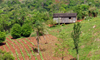 Brazil's Forest Code is one of the most forward thinking pieces of forest legislation in the world. But powerful agribusiness lobbyists, known as 'Ruralistas' and led by Aldo Rebelo, are getting ever closer to changing that.
Peru: Illegal mahogany threatening remote tribes
19.07.10
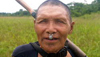 Concern for a tribe living in voluntary isolation in Peru is growing as illegal mahogany operations encroach further into their reserve, according to a new report from the Upper Amazon Conservancy (UAC).
Global: Illegal logging in decade of decline
16.07.10
 A new report from the UK-based thinktank Chatham House indicates the battle against illegal logging, a major cause of global deforestation, is being won.
Spain: Introducing the Crocusbank project
14.07.10
 A new European partnership hopes to secure the future of the world's most valuable spice and, with it, its endangered wild relatives.
UK: Prince Charles opens business and biodiversity conference
13.07.10
 The first Global Business of Biodiversity Symposium is taking place in London today. Bringing together businesses of all sizes across all sectors to discuss ways of achieving business and biodiversity gains, Prince Charles will open proceedings via video link.
EU: Success for environmentalists as illegal timber finally banned
09.07.10
 The European Parliament finally voted 644-25 yesterday in favour of the legislation banning illegal timber in the EU.
UK: Rare buttercup found in Shropshire field
08.07.10
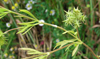 Botanists in Shropshire were delighted last week when they discovered Ranunculus arvensis growing at Pimhill Farm. The plant hasn't been recorded for 50 years and was believed to be extinct in the county.
Global: How many plants out there need saving?
07.07.10
 A very interesting article (free access) appeared today in Proceedings of Royal Society B. Carrying the title "How many species of flowering plants are there?" the content wasn't exactly what I was expecting.
China: BGCI's plant conservation brochure published
06.07.10
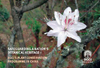 One in every five people on the planet is a resident of China. But China is not only the world’s most populous country – it is also a nation of superlatives when it comes to floral diversity: with more than 33,000 native, higher plant species, China is thought to be home to about 10% of our planet’s known vascular flora.
Mexico: Scientists recognised at Society for Economic Botany
05.07.10
 The annual Distinguished Economic Botanist prize at the 51st Society for Economic Botany (SEB) conference in Xalapa, Mexico has been awarded to Drs. Edelmira Linares and Robert Bye.
Ireland: Review of 4th Botanic Gardens Congress
01.07.10 by Sara Oldfield
 The sun shone on the National Botanic Gardens of Ireland as hundreds of delegates from around the world met in Dublin on 13 -18 June for the 4th Global Botanic Gardens Congress. The theme of the meeting was Addressing global change – a new agenda for botanic gardens.
UK IN PICTURES: Conserving plants on the UK's most southerly tip
30.06.10
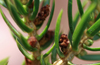 The coastal grasslands of the Lizard, Cornwall are some of the most diverse plant habitats in the country. Here, unusual geology combines with a mild climate and a remote and ancient agricultural landscape to foster many species that are found nowhere else.
Brazil: Juma REDD test case in the Amazon
29.06.10 by World Rainforest Movement
 At present, the initiative for Reducing Emissions from Deforestation and Forest Degradation (REDD) is rather a collection of proposals and some pilot schemes. However, it is being strongly pushed and at a remarkable speed inside as well as outside the United Nations process, with the aim of including carbon forest in the array of mechanisms for carbon permits and carbon offsets.
Global: "Despite obstacles , forests can be restored and protected"
28.06.10
"Despite the obstacles, forests can be restored and protected," according to Tim Rollinson, Director-General of the British Forestry Commission prior to the Commonwealth Forestry Conference in Edinburgh that opened today.
Switzerland: IUCN report on IPBES released
25.06.10
The International Science Policy Platform on Biodiversity and Ecosystem Services (IPBES) was backed by more than 230 delegates from 85 countries at the meeting in Busan, South Korea and IUCN have now released a report for all our conservation colleagues to digest and circulate.
Malaysia: Penan attacked while trying to protect their forest
23.06.10
 The Bruno Manser Foundation have reported that a Penan hunter has been violently attacked by a logging company official at a timber blockade in Sarawak, East Malaysia.
Philippines: Crucial days ahead for UNESCO Reserve
22.06.10
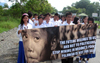 Indigenous people in Palawan, Philippines received shocking news at the start of June that the application of three new Philippine mining firms has been approved into one Financial or Technical Assistance Agreement (FTEE) in a UNESCO Man and Biosphere Reserve.
UK: Peter Ainsworth appointed Chairman of the Board of Trustees for Plantlife
22.06.10
 Former Shadow Environment Secretary is new Chairman of Plantlife. Having been an MP for 18 years and on the board of Plantlife since 2006 Ainsworth paid tribute to his predecessor Prof. Roger Crofts. (link to Plantlife website to read more...)
Europe: Political hope for illegal timber ban
21.06.10
 Good news emerged last week of a potential ban on the trade of illegal timber in the EU in 2012 after years of lobbying by environmental organisations and some quarters of the timber industry.
Europe: Preventing the introduction of pest plant species in Mediterranean Europe
18.06.10
 The spread of invasive alien species within Europe is a great and growing concern, writes Janette Fiddes. "The capacity to predict invasiveness of plant species is important for the conservation and management of natural ecosystems...
UK: Saving the Tamar Tiger - riverside rescue of rare plant
16.06.10
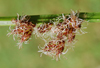 It’s not the most spectacular looking plant, but when it comes to rarity the Triangular Club Rush (Schoenoplectus triqueter) is the UK’s botanical equivalent of the tiger. This unassuming sedge is disappearing fast with the last remaining specimens growing in just a few small clumps beside the River Tamar.
Korea: Green light for biodiversity version of IPCC?
14.06.10
 The path has been cleared for the creation of a biodiversity and ecosystem services equivalent of the Intergovernmental Science Policy Platform (IPCC) after an international meeting in Korea.
UK: Rare orchids cut down before seeding
09.06.10
 A comedy of errors of tragic proportions has been played out on a roadside verge in Hampshire for the past three summers.
UK: Novel biodiversity conference looks at business opportunities
08.06.10 by John Brown & Bob Bloomfield
 Eminent business leaders from around the world are converging at Excel in London on July 13 to discuss the Business of Biodiversity - to debate the issues, consider the risks and view the opportunities that are emerging, which are linked to declining biodiversity and ecosystem services.
28.05.10
 Plantlife, one of the UK's most important plant conservation charities, has received a face-lift from non-profit branding experts Spencer du Bois.
Canary Islands: New legislation threatens already endangered plants
27.05.10
 A new legal framework proposed by Coalición Canaria threatens many of the already endangered species endemic to the Canary Islands. However, in a coordinated effort academics, political groups, and NGOs are campaigning against the new laws...
UK IN PICTURES: The New Forest comes alive
26.05.10
 Reader Tori Green lives in the New Forest and sent in these quite spectacular images of British flora.
South America: Atlantic Forest brought to life at Chelsea
26.05.10
 The World Land Trust (WLT) has won a coveted gold medal at the RHS Chelsea Flower Show by bringing to life one of the world's most endangered forests.
UK IN PICTURES: Readers' photos of spring
25.05.10
 As spring rapidly turns into summer in the UK many wildflowers are at their best and the trees are full of leaf. These wonderful photos have been sent in from far and wide. Enjoy!
UK: Planned palm oil power stations may impact Global South
21.05.10
 Thanks to recent publicity many people are aware of the concerns of palm oil in foodstuffs, but surprisingly few are aware that it could be used to fuel power stations in the UK too. UK-based campaigner Zenith Milner tells us more.
Indonesia: Greenpeace celebrate Nestlé victory
20.05.10
Greenpeace are celebrating victory in one of their latest campaigns as Nestlé commit to stop using products resulting from rainforest destruction.
UK: Kew gives world's smallest waterlily a reprieve
19.05.10
 The tiny 'Thermal' lily, Nymphaea thermarum, with pads as little as 1cm in diameter, has been successfully grown at Kew by expert propagator Carlos Magdalena.
UK: Ancient Tees Valley's ‘rainforest’ survey
18.05.10
 The Forestry Commission is backing a root and branch survey to assess the condition of the Tees Valley’s precious ancient woodlands.
Launch of Global Biodiversity Outlook (GB0-3)
12.05.10
"The news is not good," said Ahmed Djoglaf, Executive Secretary of the UN Convention on Biological Diversity (CBD) on the release of the third Global Biodiversity Outlook (GB0-3).
UK: Last reprieve for Rapunzel's bane
11.05.10
 The plant - Phyteuma spicatum - that led to Rapunzel's imprisonment in the classic German fairy tale has received some long overdue hope.
UK: Britain's rarest flower under police guard
10.05.10
Lady's Slipper Orchid (Cypredium calceolus) is probably the UK's rarest wild flower but it's being given extra special protection this year on one of its very few known sites - a golf course in Lancashire.
IUCN: Forget the banks, bail out nature
07.05.10
Never has the world faced a more pressing crisis than the current loss of biodiversity, which affects every man, woman and child. The gap between the pressure on our natural resources and governments’ response to the deterioration is widening. IUCN is calling for governments to come up with a “bailout plan,” a 10-year strategy that will help countries halt and reverse this loss.
Spain: Polygala balansae - only known European population under threat
06.05.10
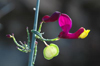 Researchers at the University of Granada (UGR) have studied the natural history and conservation status in Spain of the only known population of Polygala balansae in Europe, a thorny bush that can grow up to 1.5 metres high, and previously thought to be exclusive to Morocco.
04.05.10
 Plant Talk introduced the Colombian cocaine issue a few weeks ago. Today Colombian's
Oscar Cuervo and Nelson Reyes describe how the cocaine industry is ravaging the environment and people in their beloved home country.
Plant Talk introduced the Colombian cocaine issue a few weeks ago. Today Colombian's
Oscar Cuervo and Nelson Reyes describe how the cocaine industry is ravaging the environment and people in their beloved home country.
Global: Failing biodiversity targets
30.04.10
A new report in the journal Science shows commitments made in 2002 by world leaders to reduce the rate of biodiversity loss have failed and instead we are continuing to see declines.
29.04.10
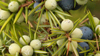 Juniper (Juniperus communis) is probably best known for being the principal flavouring in gin; the scourge of housewives up and down the country. But a new survey highlights a different problem - its slow march to possible extinction in the next 50 years.
Indonesia: Sinar Mas continue to break sustainability commitments
28.04.10
Greenpeace continue campaign to clean up Sinar Mas. Today, as shareholders arrived at the Annual General Meeting (AGM) of Golden Agri Resources (GAR), the palm oil arm of Sinar Mas, Greenpeace released fresh evidence showing how Sinar Mas continues to destroy Indonesia's rainforests despite promises to stop.
UK IN PICTURES: Common spring flowers
27.04.10
 These glorious pictures were sent to Plant Talk by Jim Dimmock and were taken at the National Trust property Coleton Fishacre, once the 2,000 acre holiday home in Devon of the D'Oyly Carte family.
St Helena: Trust wins grant to protect biodiversity
26.04.10
 The St Helena National Trust has been awarded £300,000 by the Darwin Initiative for a new three year project that will help to protect the island's internationally important biodiversity.
USA: Botanical art showcases rare plants at NYBG
21.04.10
 The New York Botanical Garden will exhibit Losing Paradise? Endangered Plants Here and Around the World in the Arthur and Janet Ross Gallery from Thursday, May 6, through Sunday, July 25, 2010.
New study investigates the scale of global mangrove losses
20.04.10
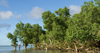 A new report in the open access journal Plos One raises the very real threat of extinction to mangroves; tree species supremely adapted to tropical and sub-tropical coasts.
UK: Rare plant returns to old school haunt
19.04.10
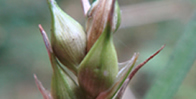 Late last year Plant Talk reported on an ambitious plan to create a third population of one of Britain's rarest plants on the site of a historic population; Charterhouse School in Surrey.
19.04.10
 As spring begins to take a firm hold on the British countryside the timing is perfect for the launch of Plantlife's Wildflowers Count - the successor to Common Plants Survey.
Colombia: Counting the cost of cocaine
16.04.10
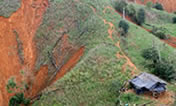 From ancient medicines, religious rituals, to famous soft drinks, and being sniffed off toilet-seats in high society clubs, very few plants have had such an effect on people and the environment as Erythroxylum coca (coca).
15.04.10
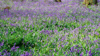 Records have started appearing at the National Trust's bluebell watch. First out of the blocks was Blickling Hall in Norfolk, closely followed by Downhill Demensne and Hezlett House in Northern Ireland.
BGCI: Help needed for Zelkova action plan
14.04.10
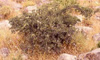 BGCI have launched a project to produce a global action plan for the conservation of Zelkova species. This small genus is highly threatened in the wild so BGCI are encouraging people to get in touch if they can help (link to BGCI site).
UK: The invaders lurking in our ponds
08.04.10
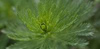 The UK's scattered ponds represent a vital network of wildlife havens. But there are hidden threats lurking in the water that a new campaign hopes to eradicate.
UK: Recovering from the winter blues
06.04.10
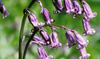 The unusually harsh winter has taken its toll on many UK species while others seem blissfully unaware and are merely getting on with business as usual. But one plant which has almost certainly been stalled by the cold weather is the bluebell (Hyacinthoides non-scripta).
Greenpeace ask Nestlé to give rainforests a break
02.04.10
 This Easter Greenpeace are campaigning to give the rainforests and orangutans of Indonesia a break by not buying palm oil from destroyed forests.
01.04.10
An introduction to BGCI's exciting new project in the Tien Shan region of Kyrgyzstan.
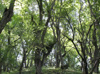 Kyrgyzstan lies at the heart of the internationally important biodiversity hotspot formed by the mountains of Central Asia. Featuring a variety of land forms, rock types and climatic conditions over a wide altitudinal range, this hotspot is home to an immensely rich diversity in animal and plant life.
Canada: University of British Columbia Annual Forestry Lecture 2010
25.03.10
 Over the past week Plant Talk has published a fascinating speech in two parts by Tim Rollinson, Director General of the Forestry Commission to the University of British Columbia.
Canada: University of British Columbia Annual Forestry Lecture 2010
24.03.10
In the second part of the feature Tim Rollinson, Director General of the Forestry Commission talks about the global forestry situation and a new partnership established to restore it.
Canada: University of British Columbia Annual Forestry Lecture 2010
22.03.10
In this two part feature Tim Rollinson, Director General of the Forestry Commission explains the history of the biggest land management organisation in the UK and their modern approach to conservation, communities, and recreation.
Qatar: Two Latin American trees protected at CITES talks
18.03.10
Two trees were given protection yesterday at the Convention on International Trade in Endangered Species of Wild Fauna and Flora (CITES) conference taking place in Doha, Qatar.
Qatar: The Mahoganies head list of plants under discussion
18.03.10
As news breaks that talks have failed to protect enigmatic animals such as polar bears and blue-fin tuna, what hope do the plants have?
Qatar: Endangered species on the table
16.03.10
The future trading of many of the world's most endangered species could be decided over the next 10 days in Doha, Qatar at the 15th COP (Conference of the Parties) CITES meeting.
India: Sacred mountain still under threat
12.03.10
 The sacred mountain at the heart of the Dongria Kondh people's culture remains under threat after a British Government investigation.
UK: Airborne infantry to attack knotweed
10.03.09
One of the UK's high-profile, so called, invasive alien species Japanese Knotweed (Fallopia japonica) is soon to face its toughest challenge yet in the form of a tiny predatory insect.
UK: Ghost Orchid (slight return)
09.03.10
 News emerged yesterday that a Ghost Orchid (Epipogium aphyllum) was found in the UK in 2009 (link to Guardian story).
Philippines: Update on Palawan campaign
09.03.10
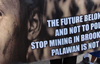 In February Plant Talk published an article about the mining threats to the landscape, people and plants of Palawan in the Philippines. Yesterday I received an impassioned plea from Aldaw (Ancestral Land/Domain Watch) to bring a petition to the attention of the public.
IN PICTURES: Welwitschia mirabilis
05.03.10
 Take a closer look at one of the world's botanical oddities.
NGOs petition EU to change biofuel stance
05.03.10
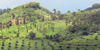 A document leaked from the EU appears to show how the Commission intends to allow and support conversion of rainforest to produce biodiesel.
UK: Where have all the hunter-gatherers gone?
04.03.10
 Plant Talk invited Jennifer Lee from the University of Liverpool to share her knowledge on modern day wild food foraging and its implications for plant conservation.
USA: Ecology for the future in Colorado's forests
24.02.10
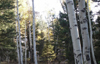 Colorado is a heavily forested, high-altitude state. Dan Binkley (Colorado State University) and Sally L. Duncan (Oregon State University) looked to the past to help understand the future of these forested landscapes in their recent study in Ecology and Society.
Asia: BBC documentary reveals the increasing problem with palm oil
23.02.10
 Last night the BBC's Panorama programme threw fresh light on the growing palm oil crisis in Asia. The undercover film crew, led by reporter Raphael Rowe, discovered evidence of palm oil companies deforesting and planting plantations on protected areas.
Plant Profile: Coast redwood (Sequoia sempervirens)
22.02.10
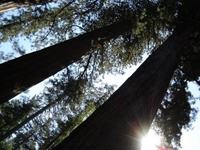 The tallest trees on earth and the last surviving member of the genus Sequoia may be under threat. Jamie McCormack, a self-confessed Cone-head, of the Eden Project takes a closer look at these ancient organisms.
Plant Profile: Philodendron bipinnatifidum
18.02.10
 In this special two part feature Prof. Ghillean Prance and Dr. Hector Keller take a close look at Philodendron bipinnatifidum (Araceae) in the Atlantic Forest of Misiones, Argentina.
USA: Reduced summer fog may put redwoods in danger
17.02.10
 A new study has shown that declining summer fog along the Pacific coast may be affecting the mighty coast redwoods and other important ecosystems.
Growing cities and crops means the forests fall
15.02.10
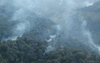 A new report in Nature Geoscience that studied high-resolution satellite imagery from 41 countries shows that deforestation is being driven by urban population growth and agricultural trade in the 21st century.
Mali: Plants at the heart of everyday life
11.02.10 by Camilla Toulmin, IIED
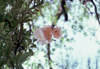 The black of the night sky was thinning as Nyeli Tangara rolled out of bed, hitching her baby onto her back and collecting her rope and bucket. In the distance, she could hear the first thud-thud-thud of pestle and mortar, as women across the village began the rhythm of a new morning.
09.02.10
 It's often said that we've all got a book inside us just waiting to be unleashed onto the world, but perhaps we should start with something smaller. Like a list.
08.02.10
 James Cameron's blockbuster 3D epic about a distant world being bulldozed by mineral prospectors has resonated around the environmental and social rights communities. This has not been lost on campaign groups who have seized the chance to get their story out to a primed global audience.
UK: World Land Trust bring conservation to Chelsea
04.02.10
 The World Land Trust (WLT) are taking a conservation message to the world's most famous horticultural event, the RHS Chelsea Flower Show.
Plant Profile: Impatiens gordonii
03.02.10
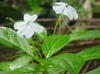 There are only about 120 individuals of Impatiens gordonii left on the islands of Mahe and Silhouette in the Seychelles. However, this critically endangered and threatened endemic of disturbed forest has become a poster-child for awareness-raising and conservation capacity building on these remote Indian Ocean islands.
Philippines: Geo-tagging reveals mining threats on the “Last frontier”
01.02.10
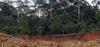 Plant Talk invited Dario Novellino from the Centre for Biocultural Diversity (CBCD), UK to speak out against the logging and mining in protected areas that is destroying the forests of Palawan.
28.01.10
 As part of the celebrations for International Year of Biodiversity IUCN bring us a wonderful new resource - Species of the Day. On each day of 2010 a threatened species is profiled from the Red List describing its habitat, population, current plight, and future hopes.
Ecuador: Yasuni - the most biodiverse place on Earth?
22.01.10
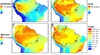 A study published in the open access journal Plos One has revealed extraordinary species richness in the western Amazon covering eastern Ecuador and northern Peru.
19.01.10
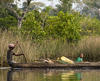 Greg Farrington, Executive Director of the California Academy of Sciences, recently visited the vast island of Madagascar with some of his team of researchers. He was kind enough to share some of his beautiful images of the extraordinary landscapes, plants, and people (and in a break from tradition, some animals too!) with Plant Talk.
Reunion: Rare orchid pollinated by cricket
18.01.10
 Scientists on the remote island of Reunion in the Indian Ocean found something they did not expect: an orchid that’s pollinated by a cricket.
UK: The Great Fen – last chance for endangered fen plants?
15.01.10
 Alan Bowley from Natural England talks about this historic landscape and what the future looks like for its populations of special plants.
Global: IUCN warns of 'extinction crisis'
13.01.10
Yesterday saw the launch of the International Year of Biodiversity in Berlin, which has the aim of celebrating all life on earth and the value of nature's riches for our lives.
Nymphaea tetragona: A rare and endangered plant
05.01.10
 The Pygmy Water-lily, Nymphaea tetragona (Ait.) Georgi (Nymphaeaceae), is the Asia-tropical representative of the diminutive water-lilies.
IN PICTURES: New species from 2009
23.12.09
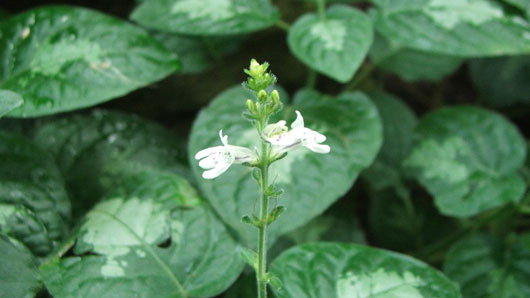 In most years - globally - approximately 2,000 new plants make themselves known to science. One of the most prolific has to be the team at Kew who collectively discovered more than 250 new species in 2009.
UK: Hundreds of new species round-off Kew's anniversary year
22.12.09
 It's been a remarkable year for Kew, as it celebrates its 250th year, and as we enter the International Year of Biodiversity in 2010 comes news of over 250 new species discovered by botanists from the famous London garden.
UK: Three new Sorbus from Cheddar Gorge
18.12.09
 The UK is not renowned for its native tree species, but it can claim three more Whitebeams (Sorbus) thanks to some cliff-hanging work by scientists from Bristol University and the National Museum of Wales (NMW).
15.12.09
 Many plant species around the world are threatened by a changing climate. But, topping the list, according to IUCN, is the Quiver Tree (Aloe dichotoma) of southern Africa.
UK: Keeping invaders out of the Forest
15.12.09
 The New Forest is one of the most important areas for wildlife in Western Europe but its rivers and wetlands are threatened by an invasion of non-native plants. The battle lines are drawn and Catherine Chatters describes how she is taking up the fight.
Sweden: Award for Congo champion
11.12.09
 Greenpeace Africa's Political Advisor, René Ngongo, who grew up near the Virunga National Park received the Right Livelihood Award (sometimes called the 'Alternative Nobel') a week ago at the Swedish Parliament for his dedicated work in defending the rights and livelihood of Democratic Republic of Congo's forest communities.
Global: A new approach to the IUCN Red List?
10.12.09
 The Red List provides us with a yearly shock. A reminder of just how many plants and animals around the world are imperilled. But how many of us truly understand what it takes to get on the list and the amount of work involved in compiling it?
08.12.09
As Copenhagen enters its second long day it's worth remembering that looking after the natural world will help steer our Earthship through the predicted storms of a changing climate.
Copenhagen: Nature has the solutions
07.12.09
 On the opening days of the Copenhagen Climate Conference there has been a call from IUCN urging leaders meeting in Copenhagen to include nature’s solutions to reduce emissions and cope with impacts of climate change in a post-2012 deal.
Australia: Red Gums - victims of politics?
04.12.09
Yesterday was a bizarre day in the politics of New South Wales, Australia. First out the blocks was the news that the premier, Nathan Rees, had announced a new 42,000 hectare National Park that would help protect the Red River Gum (Eucalyptus camaldulensis) habitat of the Murray River basin.
Africa: UK Government shows ongoing commitment to African agriculture
03.12.09
 As the Copenhagen Climate Conference looms nearer, the scars left by a changing climate are being felt across the world.
Ecuador: World's smallest orchid discovered
01.12.09
The world's smallest orchid has been discovered in Ecuador and, remarkably, the petals are so thin they're just one cell thick.
Switzerland: Korea to host next World Conservation Congress
27.11.09
The 2012 IUCN World Conservation Congress will be held in Jeju, in the Republic of Korea, the IUCN Council decided in its 73rd regular meeting.
UK: Potential to restore billion hectares of forests around the world
26.11.09
 Land areas around the world, bigger than Canada, have been identified as having potential to be restored to good quality, healthy forests, a new study has found.
UK: "More tree planting" say scientists
26.11.09
 A panel of scientists met over the last two days to make recommendations for a giant tree planting scheme in the UK. The UK has only 12% tree coverage - a measly amount when compared with the rest of Europe (37%), Finland (74%), and North and Central America (33%).
Global: Maples under threat in the wild
25.11.09
 Maples span the forests of the northern hemisphere - with strongholds in Asia, Europe and North America - and are keystone species in these ecosystems. They attract millions who marvel at their autumn colours in the wild and draw equal numbers to parks and gardens around the world. But surprisingly for plants that are so easily cultivated - they are under threat.
Amazon: Deforestation rate drops
24.11.09
 Deforestation in the Amazon is at its lowest rate for 20 years according to the latest data from the Brazilian government. Only - and it is a painful only - 7,000 square kilometres of forest was destroyed or damaged in the year August 2008 to July 2009.
Madagascar: Kew team give live updates from the field
17.11.09
 Once upon a time botanical expeditions would have ventured into the unknown, only to return (hopefully) a few months later to a rapturous home-coming as they reveal their results. But conservation is changing and it's largely a result of the rapidly shifting digital landscape.
Chile IN PICTURES: A conservation adventure
16.11.09
 In March 2009 plant collectors from the UK and Chile set off to hunt for rare and endangered species with the vision of conserving these species for the future.
Chile: A Chilean conservation adventure
13.11.09
 Smoking volcanoes, devastated towns, leech infested forests, endless breathtaking landscapes, and the beautiful but often highly endangered plant species of South America greeted the team from Wakehurst Place, Kew’s country estate in West Sussex, the Forestry Commission's Bedgebury Pinetum and Westonbirt Arboretum.
Guyana: Norway pledge investment in forests
12.11.09
 The government of Norway has pledged up to $250 million in the protection of Guyana's forests. The agreement will ensure an initial payment of $30 million into the countries REDD+ fund and the rest will come if this investment succeeds in reducing emissions and tackling poverty.
Seychelles: More news from an Island Paradise...
11.11.09
 The Seychelles are a group of 115 islands sheltering in the Indian Ocean. Famous for honeymooners lounging on sandy beaches, they appear a paradise on earth. But beneath the coconut palms you will see people and nature trying hard to get along.
Mexico: DNA barcoding the world's plants
10.11.09
 As we reported in July a team of international scientists have agreed a DNA barcode system for life on earth. This major project is taking a few more steps towards reality in Mexico City this week.
USA: Disney invest in rainforest conservation
09.11.09
It was announced last week that the Walt Disney Company - made famous by cartoon characters inspired by wildlife - are investing $7 million in forest projects (to help protect wildlife!). The investment, in partnership with Conservation International, The Nature Conservancy, and The Conservation Fund, will benefit forests in the Amazon, the Congo and the US.
UK: A comeback 60 years in the making
06.11.09
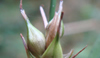 Plantlife tell us of new hope for a rare plant - lost since World War II. Starved Wood-sedge (Carex depauperata) – a delicate grass-like plant with tall flowering stems - is one of Britain’s rarest plants, currently found in only two locations in Surrey and Somerset.
IUCN Red List update shows up global failure to slow biodiversity loss
05.11.09
WWF respond to the Red List. The latest update of the IUCN Red List of Threatened Species should cause alarm over the continuing unprecedented loss of species and the failure so far of mechanisms to arrest biodiversity loss, WWF said today. The 2009 Red List, issued by the International Union for the Conservation of Nature, shows that more than one-third (36 per cent) of the 47,677 species assessed are threatened with extinction.
Over 12,000 plants on the Red List
03.10.09
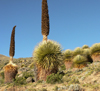 It’s that dreaded time of year again - the time when it is spelled out so clearly how badly we are failing the planet. The latest update of the IUCN Red List of Threatened Species shows that 17,291 species out of the 47,677 assessed species are threatened with extinction. Of these a staggering 12,151 are plants - up 96 on last year - but it’s almost guaranteed they will get less publicity than their furry friends.
Indonesia: Greenpeace sets up base camp in rainforest
30.10.09
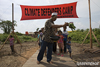 Greenpeace announced on October 27th that it has set up base in the heart of the Indonesian rainforest and will remain there for several weeks in order to bring urgent attention to the role that deforestation plays in driving dangerous climate change, a critical issue to be addressed at the UN Copenhagen Climate Summit in December.
Bulgaria: Protected area threatened as it reaches 75th anniversary
29.10.09
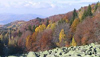 A massive expansion of skiing infrastructure is threatening the essence of Vitosha Natural Park, one of Bulgaria’s most famous and popular protected areas, on the eve of it’s 75th anniversary WWF explain.
27.10.09
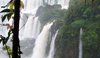 Described by Raquel Nunez, of the World Rainforest Movement, as "beautiful" but "seemingly destined to suffer in life" the Atlantic Forest of Misiones in Argentina retains one of the largest fractions of this threatened ecosystem.
VIEWPOINT: Forests high on the agenda again - really forests?
26.10.09
 We've been reporting from the World Forestry Congress in Argentina. Here the World Rainforest Movement (WRM) give their take on proceedings.
United States under pressure to protect tropical forests
23.10.09 by Ben Block, Worldwatch Institute
 The state of Acre in western Brazil gained notoriety in 1988 when cattle ranchers murdered Chico Mendes, a rubber tapper who campaigned against the destruction of the Amazon forest.
Buenos Aires: WWF call for halt to forest loss
20.10.09
 WWF is challenging global leaders to back an ambitious target on stopping forest loss as a major element of efforts to avert the looming climate catastrophe.
Buenos Aires: Forget forests at your peril - IUCN
19.10.09
 Economic development and forest loss and degradation do not have to go hand in hand, according to IUCN.
BiodiverCity? Or the great urban extinction?
16.10.09
 Have you ever stood in a city and wondered what it was built on top of? Woodland, marshes, fields? There's no doubt the building of ancient cities combined with modern urban sprawl has taken its toll on global plant life, but a new study has found out to what extent.
UK: 10 % of the World's Seeds Banked!
15.10.09
Kew's Millennium Seed Bank partnership is today celebrating a major landmark as Musa itinerans - the threatened Yunnan Banana from southwest China - becomes the 24,200th plant species to take up residence in the world's largest ex situ conservation project.
UK: Where have all the Ghost Orchids gone?
15.10.09
 The Ghost Orchid is an apt name for a plant that hasn’t been seen for such a long time, but sadly it's the latest addition to the UK extinct list.
Amazon: What price a beefburger?
13.10.09
 Four of the largest companies in the global cattle market have announced an end to their part in Amazon deforestation.
Asia: 100 new species of plants in the Greater Mekong
06.10.09
 The Greater Mekong spans Cambodia, China, Lao PDR, Myanmar, Thailand, and Vietnam. This vast landscape - which stretches from the Tibetan Plateau in China to the Mekong Delta in Vietnam - gave up many natural treasures in 2008 a report by WWF reveals.
The future of the planet depends on its forests
01.10.09
 As Copenhagen - and a promised new climate deal – rushes towards us a rallying cry has been issued by The Forests Dialogue (TFD) who say “conservation of world’s forests key to planet’s survival.”
30.09.09
 Daniel Beltra's award winning photographs from the Amazon, Congo, and Indonesia show us the beauty and fragility of the world's rainforests.
Capturing the world's rainforests
30.09.09
 Roll up for a photographic tour of the world's rainforests this Autumn. Daniel Beltra was the winner of The Prince's Rainforests Project Award at the Sony Photography Awards and a selection of his amazing images will be on show in London, Paris and Berlin.
UK IN PICTURES: Conservation in unlikely places
28.09.09
 Liverpool based Landlife have been transforming landscapes that many other organisations wouldn't go near for many years. Last week we heard from Richard Scott but today just enjoy some pictures of their work, which has seen them enrich lives from Liverpool to China to Chernobyl.
UK: Ecology, culture and passion
25.09.09
 Richard Scott from Landlife tells us how they make things happen... Starting points are critical in determining the places you might get to. They are the launching platforms for what is possible. “Culture” said Liverpool poet Brian Patten “is a by-product of people’s aspirations; it’s to do with achievement, endeavour, hope, and all things that make us a little more than we begin as.”
23.09.09
 Two days ago news of the “International Day Against Tree Monocultures” arrived in my email via the World Rainforest Movement (WRM). There seems to be a Day for everything and I couldn’t help but chuckle inwardly at the thought of marching to some local forestry and hurling abuse at some conifer or other.
South America: Exploring the land of the Jaguar
18.09.09
 No other big cat lives such a mythical existence as the Jaguar. So rarely seen in the wild it might then be surprising then that it is one of the few words in English of Guarani origin. But the Jaguar’s future and that of the people that gave it its name go hand in hand.
Borneo: Penan arrested while roadblocks come down
16.09.09
The blockades erected by the Penan in August to prevent their forest being destroyed have been dismantled according to Survival International.
USA: Save the plants, save the planet
16.09.09
 A state of the art unit for protecting the world's plants will open in Chicago next week. The Daniel F. and Ada L. Rice Plant Conservation Center goes live on 23rd September under the banner of "Save the plants, save the planet".
Kenya IN PICTURES: Scenes of devastation from the Mau Forest
15.09.09
 A few days ago Plant Talk reported from the Mau Forest in Kenya as the Kenyan Government, in partnership with UNEP, appealed for funds to help save their largest forest. These photos show exactly why that appeal was made: this is forest degradation on a huge scale, threatening not only the plants and animals but also the human inhabitants.
Papua New Guinea: Lost world uncovered by BBC team
14.09.09
 A team of experts assembled by the BBC Natural History Unit, and led by Dr. George McGavin of Oxford University, spent six weeks of 2009 exploring an extinct volcano in Papua New Guinea (PNG) where they discovered an ancient treasure trove of natural history including giant rats and one of the world's smallest parrots.
UK: Cutting down trees in the name of conservation
11.09.09
 In an unusual twist of irony the Forestry Commission plan to fell 170,000 trees in the name of conservation.
Kenya: Appeal to save largest forest
10.09.09
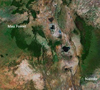 Kenya has launched an appeal to help save over 400,000 hectares of forest from further damage. The Mau Forest, which is Kenya’s largest forest system, lies to the north-west of Nairobi and has suffered from agricultural encroachment and illegal logging encouraged by state-led corruption.
UK: Lower plant strategy for Wales
09.09.09
 The mosses, lichens and liverworts - collectively known as lower plants - in alliance with fungi (and those who study them!) are the unsung heroes of natural history. So a new strategy produced by the wild plant charity Plantlife in conjunction with Plant Link Cymru comes as good news for fans of these strange beings.
UK: Britain’s forests reveal their secrets
08.09.09
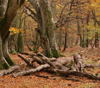 Britain’s woodlands have gone through a tumultuous past and now look set to become a vital part of the future. A new survey by the Forestry Commission of the estimated 2.75 million hectares (or 12 per cent of the land area) of woodland in Britain will form the most comprehensive record of them ever.
Peru: UN tell Peru to ask for drilling consent
02.09.09
The news from Peru continues to unravel and in the latest installment the UN have instructed Peru's government to get "informed consent" from indigenous people prior to drilling.
Peru: One million acres of Amazon saved
01.09.09
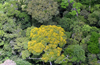 The World Land Trust-US (WLT-US) and their local partner CEDIA (Center for the Development of the Indigenous Amazonians) announced on August 27 2009 that the Matsés National Reserve was approved by the Peruvian government.
UK: 2009 is a good vintage for Britain's rarest plants
01.09.09
 The wild plant conservation charity, Plantlife, report that 2009 has been a great year for Britain's rarest plants.
Borneo: New blockades as Penan fight loggers with blowpipes
27.08.09
 Twelve villages in Borneo have joined forces to try and stop the encroachment of logging and plantation companies into their ancestral lands.
UK: Wildlife crime not taken seriously
19.08.09
 The Royal Society for the Protection of Birds (RSPB) and The Wildlife Trusts' are leading calls for a shake-up in wildlife crime policing to better protect the UK's plants and animals.
Chocolate and cosmetic brands stand up against palm oil
18.08.09
 Cadbury's New Zealand follow Lush Cosmetics by eradicating palm oil from their products.
Colorado, USA: Plant Conservation Initiative and "The Forgotten Majority"
17.08.09
 A new conservation partnership in Colorado aims to protect endemic species in the state well into the next decade.
Peru: Government investigates illegal logging
17.08.09
It was reported last week that a conservationist from Round River Conservation Studies had taken photos of illegal loggers inside a Peruvian reserve. The Peru government will investigate.
UK: Wildlife returns to flooded bog
14.08.09
 A huge restoration project to bring back 12,000 year old bogs in Northumberland has been completed nearly two years ahead of schedule.
Aerial photos show loggers inside Indian reserve
13.08.09
 Photos taken from the air above an Indian reserve for voluntarily isolated communities in the Amazon appear to show illegal logging camps.
Tree planting for at risk Bangladesh
12.08.09
Bangladesh is one of the countries most at risk from climate change so news of a massive tree planting scheme in a wildlife sanctuary south east of Dhaka is most welcome.
Disappearing monkeys means a shrinking forest
12.08.09
 Natural regeneration of the critically endangered Atlantic Forest of Brazil, Paraguay and Argentina may be adversely affected by the disappearance of animals from the forest.
Perupetro suspend Amazon auction till October
12.08.09
Peru's state energy firm, Perupetro, has pushed back the auction of Amazon slabs rich in oil and gas.
More success for Greenpeace campaigns
11.08.09
 British shoemakers, Clarks, which all discerning British schoolchildren wear (including a much younger me), join the list of companies agreeing not to source leather products from Amazon deforestation.
Brazil's environment minister to step down
11.08.09
Carlos Minc, Brazil's environment minister, will step down in March to run for state deputy in general elections next year report Reuters.
Himalayas: Vulnerable new species at mountainous crossroads
10.08.09
 A new report by WWF - The Eastern Himalayas: Where Worlds Collide - describes more than 350 new species living at a geographical and ecological crossroad.
The Burren: Invasive scrub threatens Ireland's botanical jewel
09.08.09
 Changes in management techniques threaten one of Europe's most important botanical sites, but a team of scientists and farmers are working together to safeguard its future.
08.08.09
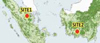 World Agroforestry Centre (ICRAF) scientists have published data on the storage of carbon in palm oil plantations.
Call for action on UN Indigenous Peoples' Day
07.08.09
 Sunday the 9th August 2009 marks the UN's Indigenous Peoples' Day as Survival International renews its call for countries to sign up to the international law for tribal peoples.
North America: Forests and a beetle go to war
05.08.09
Millions of acres of pine forest in North America has been turned to a wasteland by a pine beetle according to Reuters. The plague of pine beetles has cost billions of dollars in lost timber and land values may thwart efforts to combat climate change.
Penan people fight back against loggers
04.08.09
 Survival International report from Borneo where the Penan people are fighting back against the loggers destroying the forest.
What's the fate of Europe's last ancient forest?
03.08.09
The Independent reports from Bialowieza Primeval Forest, which is threatened by the age-old conflict of economic growth versus conservation.
Alcoa to bulldoze 25,000 acres
03.08.09
 Alcoa, the world's second-largest primary aluminium producer, have started bulldozing a 56 kilometre swath of Brazilian Amazon in Para state report Bloomberg. The clearing will end at a bauxite mine that will destroy 10,500 hectares (25,900 acres) of pristine rainforest over the next 30 years.
Restoration ecology benefits biodiversity
31.07.09
 A report in Science today tells us something we probably already knew: that ecological restoration benefits biodiversity and ecosystem services.
Timberland follow Nike's lead on Amazon leather
30.07.09
 Pressure from Greenpeace has resulted in Timberland - famous for outdoor footwear - announcing a policy agreement that will help ensure leather in their products does not contribute to new Amazon deforestation.
29.07.09
 A team of international scientists have agreed on a standard "DNA barcode" for plants. This breakthrough has been a long time in coming and will allow botanists to identify species much more readily.
Soya traders extend moratorium on Amazon destruction
29.07.09
 Greenpeace congratulated Brazilian soya traders for helping to protect the Amazon and avert a climate catastrophe by agreeing to extend the moratorium on buying soya linked to Amazon destruction for another year.
First Australian REDD deal gets go ahead in Tasmania
28.07.09
 Australia’s first Reduced Emissions from Deforestation and Degradation (REDD) project has been approved in Tasmania.
The 860 hectare private estate is run by Sydney-based Redd Forests. Mongabay.com reports that logging of old-growth forests in Tasmania in increasingly controversial: where environmentalists clash – sometimes violently - with forestry companies.
27.07.09
 It’s time we brush up on REDD - or Reduced Emissions from Deforestation and Degradation – for all our sakes.
In 2012 the Kyoto Protocol to prevent anthropogenic climate change runs out. 2012 is a significant year for many other reasons too. For instance, if you’re an ultra pessimist you may think the end is nigh - if the Mayans and their calendars are correct. If you’re a new age optimist you might believe there will be a strong shift in social consciousness - perhaps saving ourselves from our own behaviour.
Sustainable Palm Oil gets boost in China
25.07.09
 Major China-based producers and users of palm oil have announced they intend to provide more support for sustainable palm oil. This is seen as an important boost for efforts to halt tropical deforestation, as well as an incentive for the UK to up its game on sourcing sustainable palm oil.
What is the Prince's Rainforests Project?
23.07.09
 The rainforests are a rich, green belt that surrounds the world at the equator and contains over half the living plant and animal species on the planet. Some people have described these forests as the ‘earth’s lifebelt’ and you can see why. Without their services in storing greenhouse gasses, creating oxygen and rainfall, and providing a home to the most important array of biodiversity on the planet, our Earth would be a very different place and certainly one uninhabitable by mankind.
21.07.09
 New research published by Bournemouth University (UK) in Proceedings of the Royal Society B shows something quite unexpected.
Perhaps counter-intuitively the research shows woodlands are losing biodiversity but the species composition is remaining roughly similar. By comparing Dorset woodlands, in south-west England, with the same woods 70 years ago the researchers found they are suffering from "taxonomic homogenisation."
Tiny fraction of EU budget safeguards wildlife
13.07.09
 WWF warn that Europe faces a rising wave of extinctions as it continues to massively under-resource nature and wildlife protection. The news followed the release of a report by the European Commission showing 65 per cent of European habitats and more than half its remaining species are under threat.
Trees changing attitudes and lives in Africa
28.06.09

2009 is a critical year for forests and efforts to mitigate climate change could be strengthened if nations agree to protect the world's forests.
Hope still springs eternal and Africa is benefiting from these changing perceptions. The UN announced recently that, "ten million new green jobs can be created by investing in sustainable forest management". Trees are being recognised globally as more than just carbon sinks. Investing in people, trees and tree products can provide a solution to poverty, food insecurity, and economic uncertainty.
Saving the flora of Mediterranean islands
23.06.09
 Visitors to a Greek island in August, strolling to the beach through a parched olive grove, with only golden grasses and desiccated seed heads around their feet would find it hard to believe that only a few months earlier the ground had been covered in a carpet of wild flowers and herbs, stirred into life by the first winter rains. The countries of the Mediterranean basin share 25,000 different species of flowering plants and ferns and 60 per cent of these are found nowhere else on earth, making it one of the world’s biodiversity ‘hotspots’.